
A Tale of Two Balance Sheets

This paper studies the changes in balance sheet composition across both extensive and intensive margins during this decade, allowing for heterogenous effects of year and regional banking sector development by household occupation type.
Key Findings – A Mechanism for Market Monitoring of Customer-facing Issues with Unified Payments Interface (UPI)
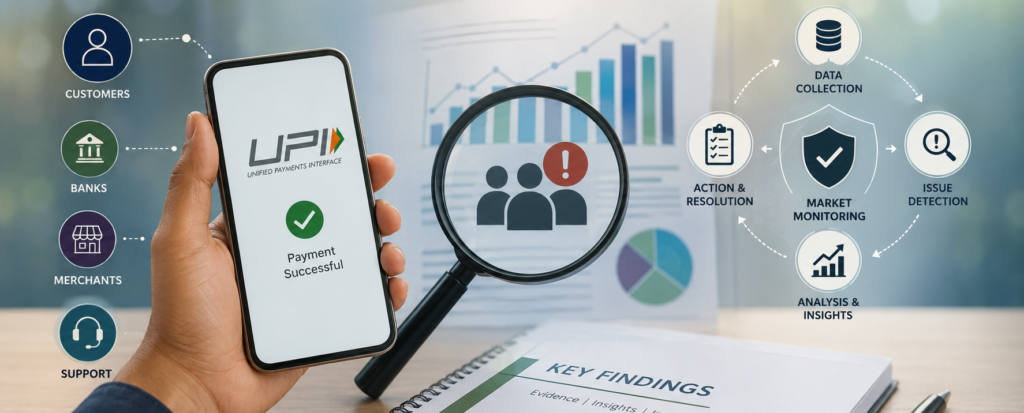
This report presents a brief synopsis of the methodology and anonymised findings.
Digitising Women’s Money Management
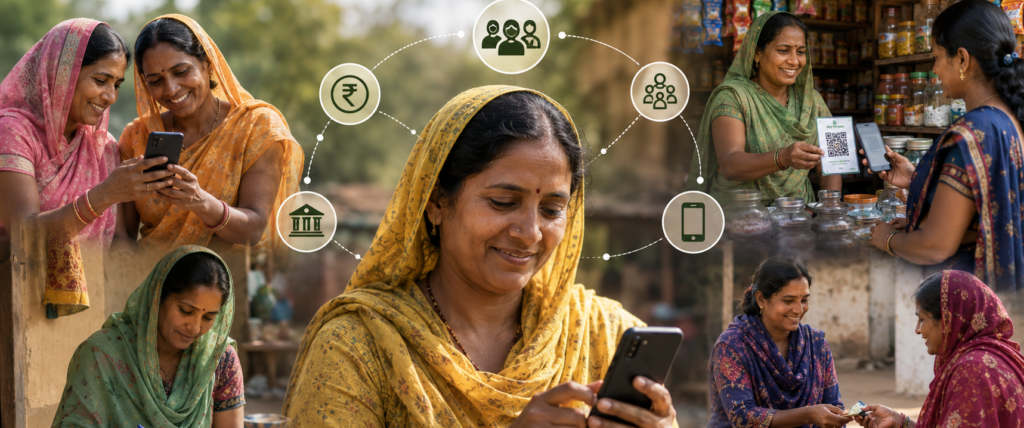
The study followed 293 women in rural Rajasthan over 6 months, documenting more than 135,000 financial transactions while introducing assisted access to a UPI-based mobile payments application through community-based women facilitators.
Reframing Financial Health: From Canary in a Coal Mine to a Thermostat for Action

Our submission in this paper is that impact measurement in financial inclusion, i.e., financial health measurement can, and ought to, play a more diagnostic role in financial inclusion strategy. This is the conceptual departure that the title of the paper describes as the shift ‘from a canary in a coalmine to a thermostat’.
Microfinance Beyond Lending: Looking at Emerging Claims

This is Part 2 of a 3-part series on the recently released NCAER-MFIN report, “Assessing the Effectiveness of Regulated Small Borrowing in India”. In this blog, we turn to some of the broader claims advanced in the report regarding the wider benefits of microfinance and assess whether these claims hold up when situated in a broader empirical context.
Examining ‘Gender Gap’ in Financial Inclusion in India using the Global Findex Database 2025

This blog critically examines the concept of the “gender gap” in financial inclusion by distinguishing between unconditional differences and those that persist after controlling for socio-economic factors, using evidence from the Global Findex 2025 dataset
Paisas to Prosperity: The Long Road to Savings

In this blog, we delve further to uncover the institutional, cultural, and evolutionary factors underpinning the challenges of engendering formal savings among LIHs.
Misled and Mis-sold: Financial misbehaviour in retail banks?
We use an audit methodology where auditors ask for tax saving instruments from banks and document the disclosures made on product features at the time of sale. In private sector banks with high sales incentives, the high commission product is recommended. In public sector banks, where there are deposit mobilisation targets, fixed deposits are recommended. […]