
Methodological Concerns in Measuring Microfinance Outcomes
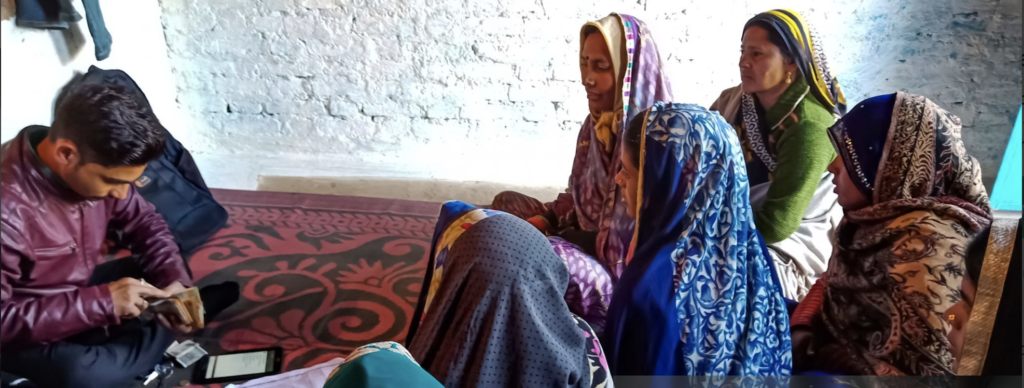
This is Part 3 of a 3-part series on the recently released NCAER-MFIN report, “Assessing the Effectiveness of Regulated Small Borrowing in India”. In this blog, we examine issues related to measurement and empirical strategy.
Microfinance Beyond Lending: Looking at Emerging Claims

This is Part 2 of a 3-part series on the recently released NCAER-MFIN report, “Assessing the Effectiveness of Regulated Small Borrowing in India”. In this blog, we turn to some of the broader claims advanced in the report regarding the wider benefits of microfinance and assess whether these claims hold up when situated in a broader empirical context.
What is Actually Happening in the Microfinance Sector?

This is Part 1 of a 3-part series on the recently released NCAER-MFIN report, “Assessing the Effectiveness of Regulated Small Borrowing in India” (March 2026).
Microfinance needs reform more than credit backstops if India wants to avert another crisis in this sector

Liquidity support by the Centre may offer symptomatic relief, but India’s microfinance sector needs a structural recast. Without reforms to address recurring cycles of over-lending and loan stress, another credit guarantee package will only postpone the next crisis in this fragile sector.
India’s Most Recent Microfinance Crisis: Theory, Empirics & Learnings

In the paper, we lay out a theoretical frame for thinking about microfinance crises. The theoretical frame draws from Hyman Minsky’s 1977 work on financial instability, and layers over it a cultural reasoning that recognises overlending and overborrowing as cultural traits that sometimes takes hold of microfinance markets.
Assessing the Borrower-Level Impact of the Insolvency and Bankruptcy Code: A Study of the Fresh Start Process

This paper focuses on Part III of the IBC, which deals with natural persons, proprietorships, and personal guarantors for corporate debt.
Emerging Trends and Shifts in Microfinance
This study sought to understand the impact of the new regulations on the microfinance sector through the lens of different categories of stakeholders – customers, leadership at microfinance institutions (MFIs) and intermediating staff.
How Should the RBI Respond to the Microfinance Crisis?
Debt distress among microfinance borrowers is on the rise, sufficiently so that it may be characterised as a crisis for the sector. This is driven by factors across the supply- and demand-sides, as well as factors inherent in the nature of the credit cycle, where periodic booms and busts have been present throughout history. To address this, we propose two sets of recommendations for the regulator: a set of recommendations that can be initiated in the short-term and another set that can be initiated over the medium-term.
Submission by Dvara Research to the Ministry of Finance as part of Pre-Budget Consultation with the honorable Finance Minister Nirmala Sitharaman, Jan 2nd 2025

The Government of India called for pre-budget consultations in early January 2025. Dvara Research was one of the invitees, and we are once again grateful to policy makers for reposing trust in our work. In the past as well, Dvara Research has been a partner and advisor of choice for key policy-making bodies in the country.
How rural households manage their financial lives- Insights from the NAFIS Report 2021-22

This blog presents key insights from the second round of the survey report, NAFIS 2021-22, and finds that the rural households’ investment portfolio continues to be dominated by physical assets, which is in contrast with the predominance of formal debt on the liabilities side of the household balance sheets.