
Methodological Concerns in Measuring Microfinance Outcomes
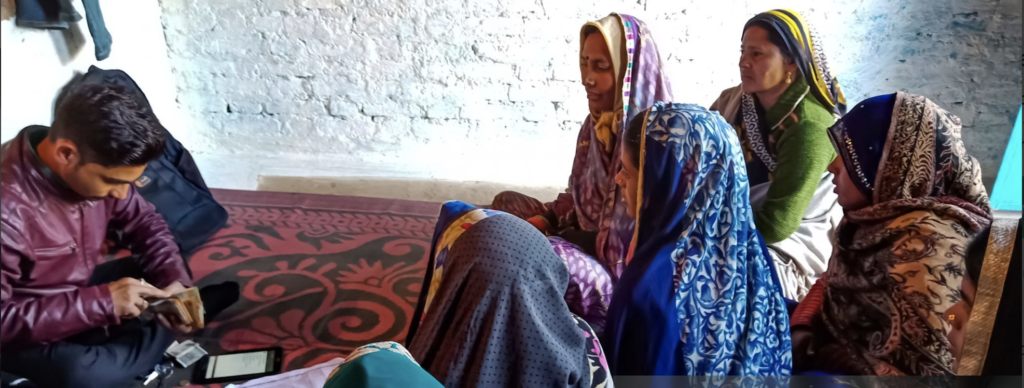
This is Part 3 of a 3-part series on the recently released NCAER-MFIN report, “Assessing the Effectiveness of Regulated Small Borrowing in India”. In this blog, we examine issues related to measurement and empirical strategy.
Microfinance Beyond Lending: Looking at Emerging Claims

This is Part 2 of a 3-part series on the recently released NCAER-MFIN report, “Assessing the Effectiveness of Regulated Small Borrowing in India”. In this blog, we turn to some of the broader claims advanced in the report regarding the wider benefits of microfinance and assess whether these claims hold up when situated in a broader empirical context.
What is Actually Happening in the Microfinance Sector?

This is Part 1 of a 3-part series on the recently released NCAER-MFIN report, “Assessing the Effectiveness of Regulated Small Borrowing in India” (March 2026).
Microfinance needs reform more than credit backstops if India wants to avert another crisis in this sector

Liquidity support by the Centre may offer symptomatic relief, but India’s microfinance sector needs a structural recast. Without reforms to address recurring cycles of over-lending and loan stress, another credit guarantee package will only postpone the next crisis in this fragile sector.
India’s Most Recent Microfinance Crisis: Theory, Empirics & Learnings

In the paper, we lay out a theoretical frame for thinking about microfinance crises. The theoretical frame draws from Hyman Minsky’s 1977 work on financial instability, and layers over it a cultural reasoning that recognises overlending and overborrowing as cultural traits that sometimes takes hold of microfinance markets.
Emerging Trends and Shifts in Microfinance
This study sought to understand the impact of the new regulations on the microfinance sector through the lens of different categories of stakeholders – customers, leadership at microfinance institutions (MFIs) and intermediating staff.
How Should the RBI Respond to the Microfinance Crisis?
Debt distress among microfinance borrowers is on the rise, sufficiently so that it may be characterised as a crisis for the sector. This is driven by factors across the supply- and demand-sides, as well as factors inherent in the nature of the credit cycle, where periodic booms and busts have been present throughout history. To address this, we propose two sets of recommendations for the regulator: a set of recommendations that can be initiated in the short-term and another set that can be initiated over the medium-term.
Exploring the Phenomenon of Debt Distress and Possible Solutions

This chapter emphasises the realities of the sector that create a feedback loop, where lenders are incentivised to over-lend and borrowers to over-borrow, until crisis intervenes as a necessary and often tragic correction
How have household balance sheets changed post the pandemic? A descriptive analysis of household portfolios using CMIE’s Consumer Pyramid Household Survey Dataset

According to a report by Crif High Mark, microfinance loans overdue for up to 31-180 days increased from 2.1% in March 2024 to 2.7% in June 2024. While there could be several supply-side factors at play for the rise in defaults, in this blog we direct our attention to reviewing the household side of the story by assessing the changes in household balance sheets post the COVID-19 pandemic.
Let’s not conflate microfinance with self-help-group financing
The microfinance industry has witnessed moves by the Reserve Bank of India (RBI) to revise the regulatory framework (March 2022) for it and also caution it against an exclusive focus on business growth (November 2022).