
From Paisas to Prosperity: Savings as an Asset-Building Tool for Women from Low-Income Households
In the following sections of this blog, we discuss the unique and complex financial lives of these households to set the context for product and process designs, delve into what a savings product for not just women but Low-Income Households (LIHs) in general could look like, and highlight some of the insights from various kinds of financial service providers on the challenges and opportunities in operationalising such a savings product for this segment.
Part 2 – Is lack of trust keeping customers away from digital financial services? – Understanding the contours of trust
In the first blog in our trust series, we laid down the contours of trust. In this blog, we attempt to unpack what the proximate grounds for trusting Digital Financial Services or DFS may be. Trust is the most cited motivator for the adoption of digital financial services or DFS (Kajol et al., 2022). Lack […]
Response to IRDAI’s Exposure Draft on Insurance Product Regulations, 2023
The Insurance Regulatory and Development Authority of India (Insurance Products) Regulations, 2023, hereafter “Draft Regulations”, was released by the Insurance Regulatory and Development Authority of India (IRDAI) in December 2023.
Part 1- Is lack of trust keeping customers away from digital financial services? Understanding the contours of trust
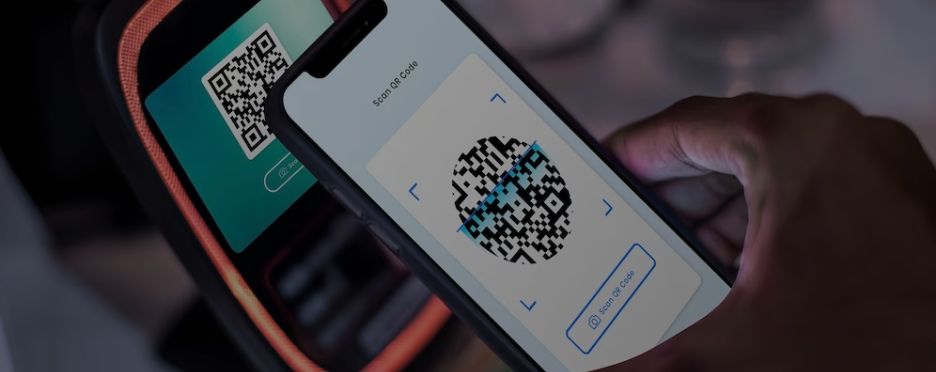
This blog is the first in our trust series where we study trust in digital financial services. This blog attempts to lay down the conceptual contours of trust.
Designing a User-centric Grievance Redress Mechanism (GRM): A Sector-agnostic Checklist
This research presents a framework comprising nine principles, which we believe are pre-requisites for creating user-centric GRMs.
Does moratorium affect loan repayment behaviour?
Governments and lenders provide loan moratoria to help struggling borrowers, particularly during an economic crisis. While it can provide relief to borrowers, such a policy also has a possibility of inducing moral hazard among the beneficiaries.
The financial lives of platform workers: A diaries study in Bengaluru, India
The study explores the financial lives of platform workers and finding answers to the following questions: do platform workers face volatility in their income and expenses, and how much do their earnings and expenditures vary on a day-to-day basis; how long do they work to earn as much as they would like to; whether and where they save and borrow; what strategies do they adopt to manage their money to meet their day-to-day expenses, raise lump-sums, deal with and recover from shocks; what social protection benefits do they have access to; what their financial goals are; and what barriers exist, if at all, in their pursuit of those goals.
A customer-centric framework to implement data protection in financial services
Dvara Research, with the Data Security Council of India (DSCI), co-developed two privacy handbooks directed at FSPs in the insurance and banking sector. The handbooks help FSPs implement data protection in a customer-centric manner throughout the data lifecycle, including in legacy systems.
How mental models interplay with consent: Unpacking challenges to informed consent
This blog is about a behavioural study conducted jointly by Dvara Research and Final Mile to uncover mental models that may nudge customers to disengage with consent screens.
Do UPI-fraud-awareness campaigns work?
Proposal for an outcome-based survey to test the effectiveness of UPI-fraudawareness campaign.